Company Watch This item summarizes information released by Approaching.AI. It is reproduced with attribution and has not been independently verified by Inference Watch.
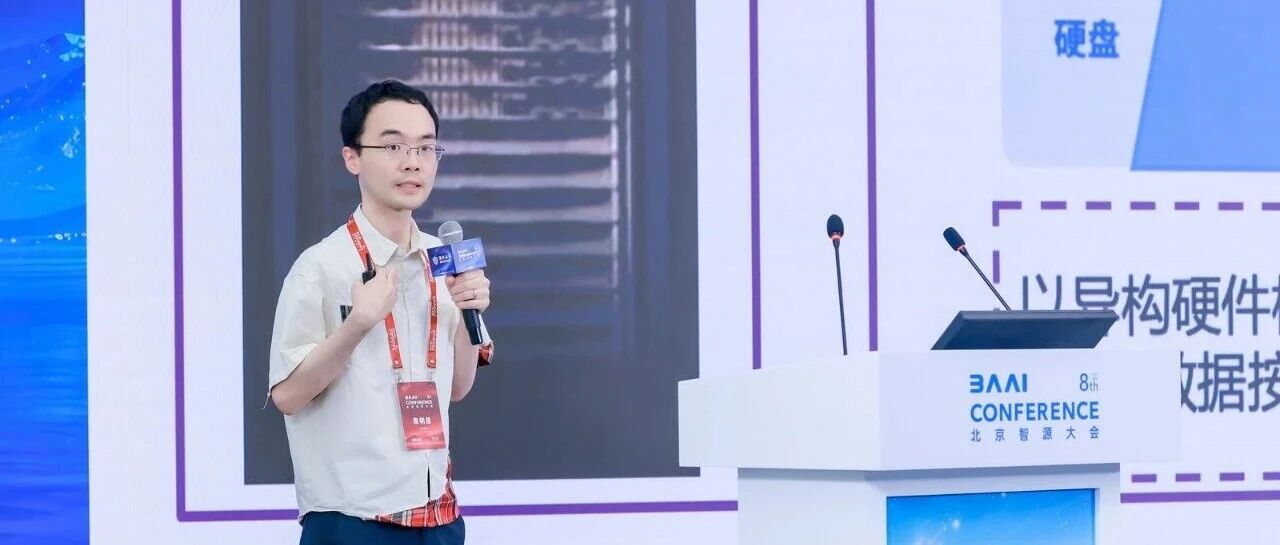
At the 2026 Beijing BAAI conference, Tsinghua associate professor and Approaching.AI co-founder Zhang Mingxing gave a talk titled "Since the Agent Era, How Do We Reduce Token Costs?" According to the release, he argued that multi-turn agent tasks, very long contexts and tool calls have made inference the main battlefield for AI cost, and that raw compute scale does not translate directly into high-quality token capacity.
He described three strands of the company's work: Mooncake, which decouples prefill, KV cache and decode; KTransformers, which enables CPU-GPU heterogeneous inference on local hardware; and attention to the fast-rising CPU cost inside agent infrastructure.
The argument in plain terms
Agent workloads spend most of their tokens on context that has already been processed. If that context can be stored and reused instead of recomputed, cost falls without touching model quality. That is the "storage-for-compute" bet, and it is the same mechanics covered in prefix reuse economics and sizing prefill and decode pools.
System-and-algorithm co-design is a reasonable framing, but it is also a supplier's framing: it favors vendors who control both layers. Buyers should ask what is measured — goodput, effective tokens, TTFT stability — rather than accepting architecture diagrams as evidence. See Goodput Is the Throughput That Bills.
Why it matters
As agents become the dominant workload, the unit of comparison shifts from price per million tokens to cost per completed task. Vendors that optimize the serving stack for reuse may win that comparison even at a higher list price.


