Company Watch This article is based on materials provided by Approaching.AI. Company-reported figures, product claims and translated quotations have not been independently verified by Inference Watch.
Editor's note: The following Q&A addresses the questions enterprise teams most often ask when moving AI from pilot to production. Answers reflect publicly available information from Approaching.AI (趋境科技) and reported industry data.
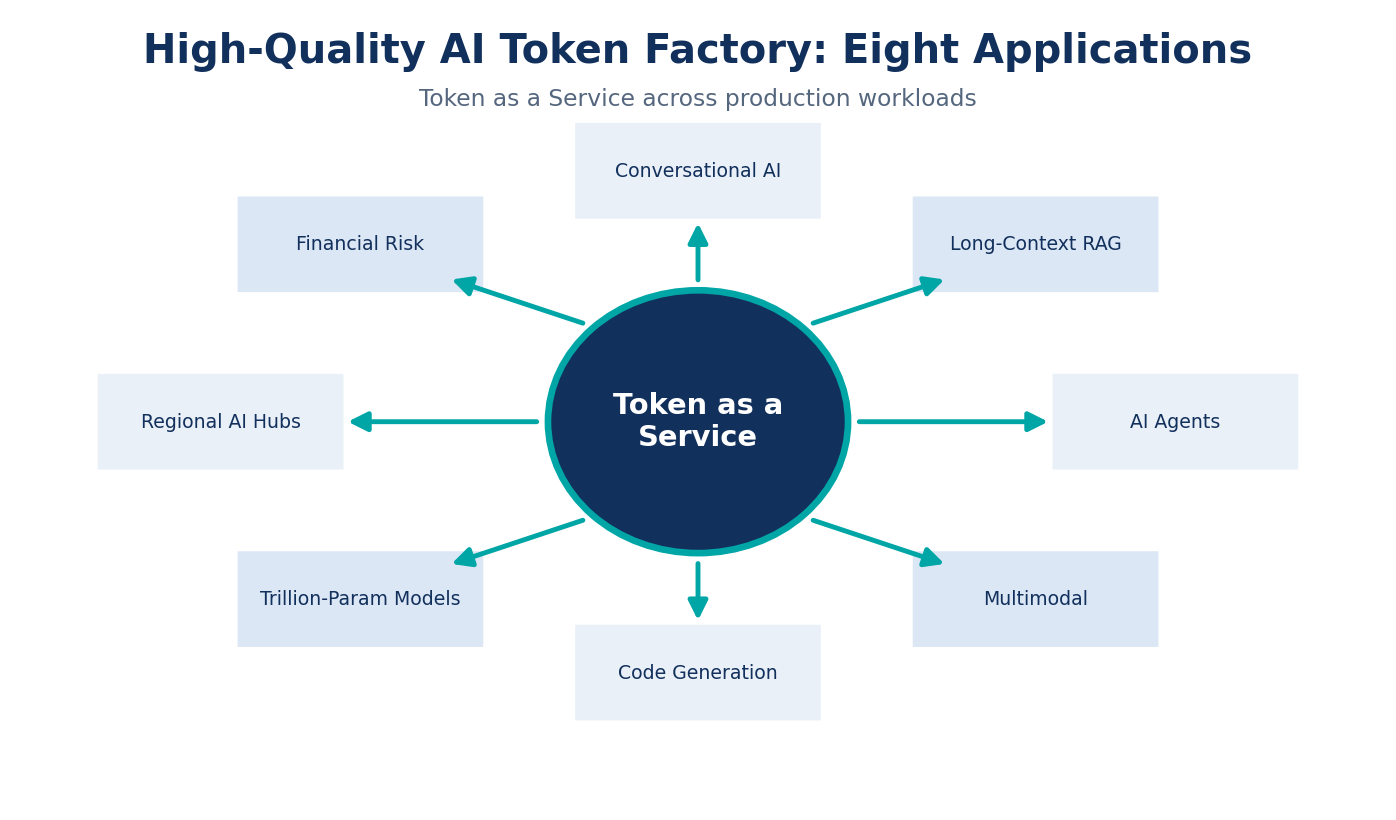
Figure: Eight production scenarios served by Approaching.AI's High-Quality AI Token platform. Illustration: Approaching.AI.
Eight questions
What is a High-Quality AI Token, and why does "quality" matter?
Approaching.AI defines it as token service anchored to production requirements: high intelligence, low latency, high speed, strong stability and controllable total cost. It is the standard the company applies across its Token as a Service platform. In early markets, supply was judged by volume. As models entered core business processes, buyers began asking a different question — not how many tokens, but how many usable tokens per dollar under real load.
Which applications consume the most tokens today?
According to industry reporting, AI video and AI coding were among the first large-scale token-consuming applications, with agents and long-context workflows following. A single agent task can consume hundreds of thousands of tokens, which changes the economics entirely.
Why does conversational AI need special handling at scale?
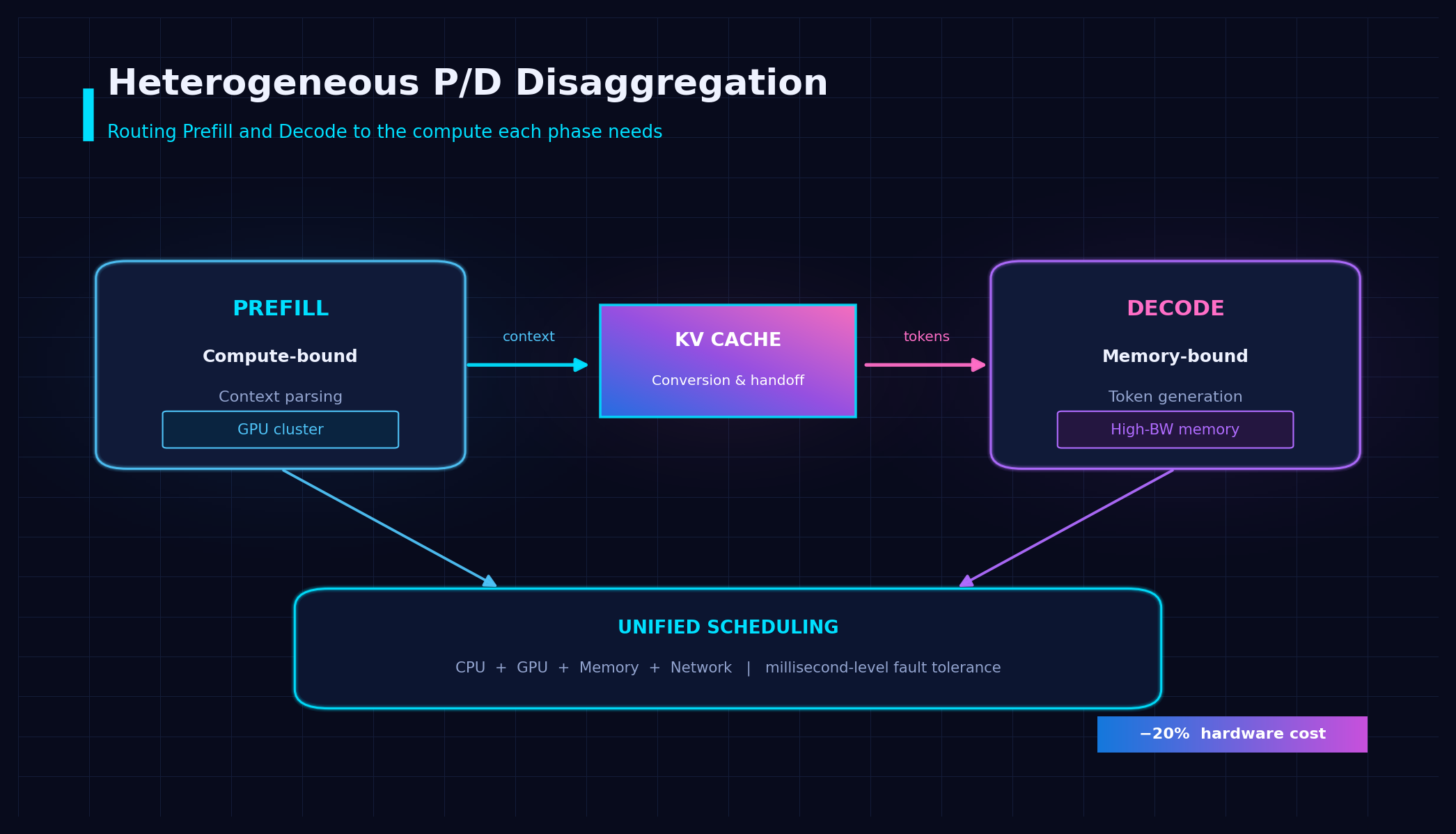
High concurrency makes Decode the bottleneck, causing first-token delay to fluctuate at peak. A dedicated high-bandwidth Decode pool stabilizes latency and serves more sessions per GPU.
What about long-context retrieval and RAG?
Long-document Prefill is compute-dense. Assigning it to compute-intensive resources, then using heterogeneous KV cache conversion to carry context forward, keeps long-context Q&A both accurate and responsive.
How does this help AI agents?
Agents alternate repeatedly between reading context and generating actions. Independent Prefill/Decode scheduling prevents the resource mismatch that makes token output per task unpredictable.
Can domestic chips really serve trillion-parameter models in production?
That is the claim behind Approaching.AI's Heterogeneous P/D Disaggregation — allowing ordinary domestic cards to produce High-Quality AI Token supply at scale. The company says its approach lowers factory hardware cost by 20 percent while preserving output quality. [Source: China Times, Nov 2026]
Is there a published customer example?
Yes. The company's website describes an inference-appliance deployment in which one workstation runs six models in mixed inference, supports four business scenarios and reduces cost by 85 percent. The customer's data could not move to the cloud, private deployment started at millions of dollars, and AI talent was scarce. [Source: Approaching.AI website]
What ties all these scenarios together?
The same inference architecture across every workload — and a philosophy the company sums up as "Fewer Models. Deeper Optimization. Higher Quality." Scenario-specific depth, in other words, rather than maximum model count.
A note on scope
Six of the eight workload categories above are illustrative applications derived from publicly reported workload characteristics and the company's published technical capabilities — not named customer deployments. Approaching.AI has confirmed only the appliance case as a published customer example. Named case studies and per-scenario performance figures are pending confirmation.
Related coverage
About Approaching.AI (趋境科技):Approaching.AI works with enterprise teams deploying AI in production. Its published material documents a mixed-model inference appliance and a set of workload scenarios spanning conversational AI, agents, code generation and large-model serving.
Sources:Approaching.AI official website; China Times (Nov 2026); Leidi/Tencent News (Oct 2026).